The Year-Round Silk Wardrobe: A Strategic Buying Calendar for Independent Designers
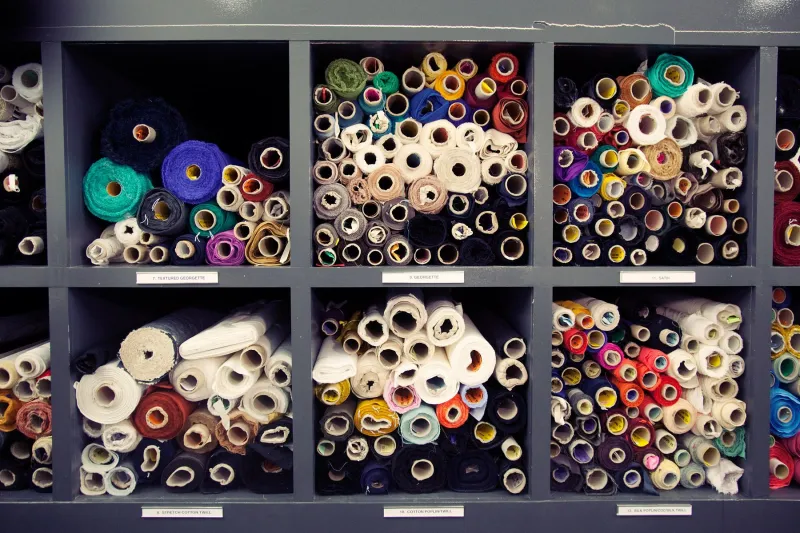
Photo: silk fabric bolts organized storage fashion designer studio, via i.pinimg.com
There is a particular kind of anxiety that visits independent designers every spring and fall: the realization that the silk they need for the next collection is either unavailable, priced at a premium, or available only in quantities that strain a small studio's cash flow. For designers operating without the purchasing leverage of a major house, silk procurement can feel reactive—a scramble to secure what the market offers rather than a deliberate act of creative and financial planning.
It does not have to be this way. Silk, more than almost any luxury textile, follows predictable seasonal rhythms. Understanding those rhythms—and aligning your purchasing calendar to them—transforms sourcing from a quarterly crisis into a genuine competitive advantage.
The Harvest Behind the Bolt
To understand silk pricing and availability, it helps to return briefly to the source. The majority of the world's finest silk originates in China, India, and select regions of Southeast Asia, where Bombyx mori silkworms are raised on mulberry leaves through carefully managed cultivation cycles. In China—still responsible for the largest share of global silk production—the primary harvest occurs in spring, with a secondary harvest in autumn. These cycles directly influence the volume and pricing of raw silk available to mills and, by extension, to the fabric market that American designers access.
When raw silk is abundant following a strong spring harvest, mill production increases, and finished fabric pricing tends to soften in the months that follow. When harvests are disrupted by drought, disease, or labor constraints—as has occurred periodically in recent years—scarcity ripples forward through the supply chain, tightening availability and elevating costs by the time the impact reaches a designer's studio in New York or Los Angeles.
This is not esoteric knowledge reserved for large importers. It is the kind of supply-chain literacy that any independent designer can develop with a modest investment of attention.
A Quarter-by-Quarter Purchasing Framework
Q1: January Through March — The Strategic Window
The first quarter represents one of the most underutilized buying opportunities in the independent designer's calendar. Post-holiday inventory clearances at fabric houses and distributors often make this period fertile ground for acquiring foundational silks—charmeuse, habotai, crepe de chine—at favorable pricing.
More importantly, Q1 is the moment to place forward orders for spring and summer production. Designers who commit early frequently secure preferential pricing, better selection across colorways, and guaranteed allocation before peak demand arrives. This is the quarter to review your previous year's sell-through data honestly, identify the weights and weaves that performed well, and build your core inventory around those proven selections.
Q1 Checklist:
- Review prior year's fabric usage and waste metrics
- Identify two or three core silk weights and weaves to anchor the year
- Place forward orders for spring/summer colorways
- Explore end-of-season offerings from trusted suppliers
Q2: April Through June — Confirmation and Supplementation
By April, the spring harvest in major producing regions is underway or recently concluded. This is a period of relative abundance in the market, and it is also when designers are typically finalizing their fall/winter concepts. The strategic move here is twofold: confirm that your Q1 forward orders are on track, and begin sourcing the heavier weights—dupioni, silk suiting, heavyweight charmeuse—that will anchor your colder-season collection.
Sarah Chen, a San Francisco-based designer of women's occasion wear who has refined her sourcing approach over eight years of independent practice, describes Q2 as her "confirmation quarter." She uses this period to place smaller supplemental orders for accent fabrics—specialty weaves, novelty textures, embroidered silks—while her core inventory is already secured. "The designers who wait until August to start thinking about fall fabrics are competing with everyone else for whatever's left," she notes. "I'd rather be done with that conversation in June."
Q2 Checklist:
- Confirm forward order delivery timelines
- Source heavyweight silks for fall/winter production
- Evaluate specialty and novelty fabrics for accent use
- Begin building a storage reserve of high-velocity basics
Q3: July Through September — Patience and Precision
The third quarter is the most counterintuitive period in the silk buying calendar. Demand from larger fashion houses is at its highest as fall collections move into production, and this pressure on supply can inflate pricing for popular weights and weaves. For independent designers, this is generally not the moment to make major fabric commitments.
Instead, Q3 rewards patience and precision. Use this quarter to monitor market pricing without reacting to it, evaluate your current inventory against projected production needs, and identify any gaps that require targeted supplemental purchases. If your storage capacity and cash flow allow, this is also the period to watch for opportunistic buys—overstock offerings, discontinued colorways, or end-of-run lots from mills clearing inventory ahead of their own seasonal transitions.
Marco Delgado, a Dallas-based menswear designer who has built a reputation for his silk suiting program, describes his Q3 approach as "disciplined watching." He maintains a short list of fabrics he would acquire at the right price and checks in with his suppliers monthly without committing to volume orders. "You find things in Q3 that nobody was looking for," he says. "A run of 19-momme charmeuse in a colorway that didn't sell for someone else can be exactly what you need—if you're paying attention."
Q3 Checklist:
- Monitor pricing without making reactive volume commitments
- Audit current inventory against Q4 and Q1 production projections
- Watch for opportunistic lot purchases and overstock offerings
- Evaluate storage conditions ahead of winter
Q4: October Through December — The Long View
The final quarter closes the loop. Holiday production demand is at its peak, but designers who have followed a disciplined buying calendar through the preceding three quarters should be working largely from existing inventory rather than scrambling for last-minute allocations.
Q4 is the appropriate moment to conduct a thorough end-of-year fabric audit, assess which silks earned their place in the inventory and which consumed cash without adequate return, and begin the forward-planning conversations with suppliers that will set the tone for the following year. It is also the quarter to establish or deepen relationships with sourcing partners—a conversation held in December, when a supplier is not overwhelmed by peak-season orders, often yields better terms and more attentive service than the same conversation attempted in September.
Q4 Checklist:
- Conduct a full inventory audit
- Identify underperforming fabrics for clearance or creative repurposing
- Begin supplier relationship conversations for the coming year
- Draft preliminary Q1 forward order specifications
Storage as Strategy
No buying calendar succeeds without thoughtful storage practices. Silk is vulnerable to light, humidity, and compression over extended periods. Designers building a reserve inventory should store folded silks in acid-free tissue, maintain humidity levels between 45 and 55 percent, and avoid direct sunlight exposure. Climate-controlled storage, even in a modest form, pays for itself quickly when it prevents the yellowing, brittleness, or mildew that can render carefully sourced fabric unusable.
The goal is not to accumulate silk indiscriminately—it is to hold a curated reserve of proven performers that insulates your production timeline from market volatility. That distinction, between strategic inventory and undisciplined hoarding, is what separates the designers who thrive through seasonal fluctuations from those who are perpetually at the market's mercy.
Building the Calendar That Fits Your Studio
The framework above is a starting point, not a prescription. Every studio operates with different cash flow rhythms, storage constraints, and collection timelines. What remains constant is the underlying principle: silk rewards the buyer who plans with the grain of its natural production cycles rather than against them.
At First Silk, we work with independent designers at every stage of this process—from understanding which momme weights to prioritize for their specific end uses, to identifying the seasonal windows where their sourcing investment will yield the most return. The silk spectrum is rich, varied, and deeply tied to craft traditions that span centuries. Approaching it with strategic intention is not merely a financial discipline. It is a form of respect for the material itself.