Made in America, Start to Finish: The Rise of the Domestic Silk Supply Chain
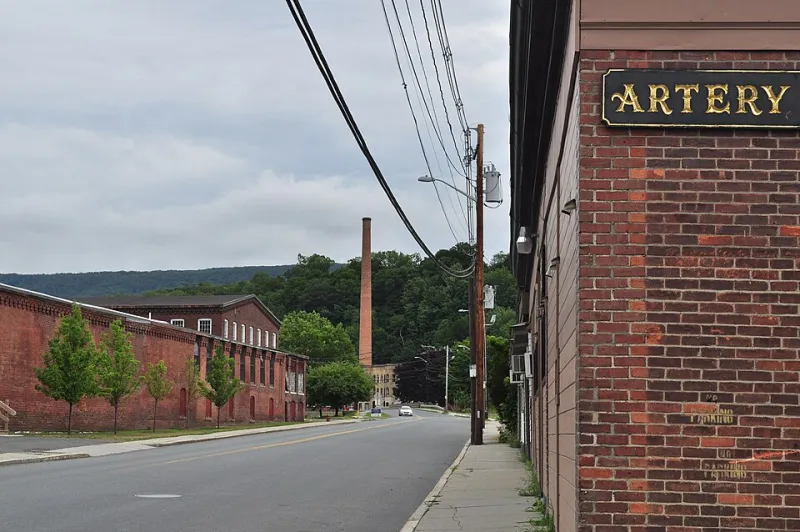
Photo: Joe Mabel (on Flickr as Joe Mabel from Seattle, US), CC BY-SA 3.0, via Wikimedia Commons
For most of the past century, American fashion operated on a straightforward assumption: silk comes from abroad. China, India, Thailand, and Brazil have dominated global silk production for so long that sourcing domestically barely registered as a strategic option. You imported silk. That was simply how it worked.
That assumption is now being challenged with real capital, real infrastructure, and a growing body of evidence that domestic vertical integration — controlling sericulture, reeling, weaving, and finishing within American borders — is not merely idealistic but increasingly viable. The designers and brands paying attention to this shift may find themselves with a meaningful competitive advantage in a market where provenance, sustainability, and supply chain reliability have become genuine selling points.
The Problem That Created the Opportunity
The pandemic years exposed vulnerabilities in global textile supply chains that the industry had long preferred to overlook. Extended lead times, unpredictable pricing, port congestion, and sudden shifts in export policy from producing nations left American luxury brands holding promises they could not fulfill to retailers and clients. For silk specifically — a material with complex production requirements and a relatively small global supplier base — the disruptions were acute.
Simultaneously, American consumers and the brands that serve them were growing more sophisticated about provenance. "Made in the USA" has always carried marketing value, but increasingly it carries something more substantive: the ability to audit a supply chain, verify labor conditions, confirm fiber content, and guarantee delivery windows. These are capabilities that a distributed, multi-country supply chain simply cannot offer with the same reliability.
Those twin pressures — supply chain fragility and traceability demand — created the conditions for domestic vertical integration to become economically attractive rather than merely aspirational.
Sericulture Returns to American Soil
The most foundational element of any silk supply chain is sericulture: the cultivation of silkworms and the harvesting of their cocoons. This is also, historically, the element most thoroughly absent from American production. The US once had a modest silk industry, centered largely in the mid-Atlantic states in the nineteenth century, but it collapsed well before the modern era.
Its revival is tentative but real. Small-scale silkworm operations have emerged in states ranging from California to the Carolinas, often beginning as agricultural research projects or artisan enterprises before scaling toward commercial relevance. What makes these operations particularly interesting is their relationship to technology: modern sericulture in the US is frequently paired with data-driven approaches to mulberry cultivation, climate-controlled rearing facilities, and selective breeding programs that would have been unrecognizable to nineteenth-century producers.
The fiber that results from domestically reared silkworms can be traced to a specific farm, a specific season, and in some cases a specific cohort of silkworms. For a luxury brand positioning itself around radical transparency, that level of documentation is genuinely unprecedented in the silk category.
The Middle Stages: Reeling, Throwing, and Weaving
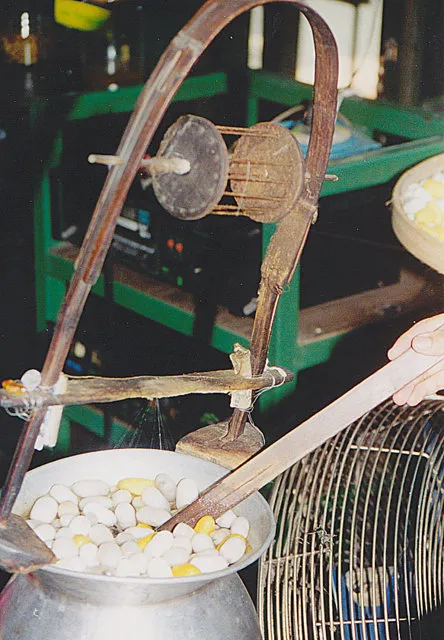
Between the cocoon and the finished fabric lie several technically demanding stages that have historically required specialized equipment and expertise concentrated in producing regions overseas. Reeling — the process of unwinding continuous filament from the cocoon and combining it into raw silk thread — requires machinery that is neither inexpensive nor simple to operate. Throwing, which twists and combines reeled filaments into yarn suitable for weaving, demands similar precision.
A small but growing number of American companies are investing in this middle infrastructure, often in partnership with academic textile programs or with equipment sourced from established European manufacturers in Italy and Switzerland. The investment thesis is not that American labor costs will match those of Asian producers — they will not — but that the premium commanded by verified domestic provenance, combined with the operational efficiencies of integration, can support a financially sustainable model.
Several weaving operations, particularly in the American South and in New England states with historical textile manufacturing heritage, have begun incorporating silk into their production alongside established linen and cotton lines. These facilities bring existing expertise in technical textile production and, crucially, existing relationships with American luxury brands.
What Designers Are Finding at the End of the Chain
For designers sourcing from emerging domestic vertical producers, the experience differs from traditional importing in several meaningful ways.
Lead times, while not instantaneous, are considerably more predictable. When your silk is being produced within US borders, you are not managing ocean freight schedules, customs clearance timelines, or the possibility that an export restriction in a producing country will strand your order. Communication with suppliers happens in the same time zone, in the same language, under the same legal framework.
Minimum order quantities are often more accessible than those imposed by overseas mills operating at industrial scale. A domestic producer managing a smaller, more specialized operation may be genuinely willing to work with an independent designer at quantities that a Suzhou mill would decline without hesitation.
Finally, there is the question of finishing. Several domestic vertical producers are investing in environmentally responsible dyeing and finishing facilities that meet or exceed current EPA standards — a meaningful differentiator in an era when the environmental footprint of textile production is under increasing scrutiny from both consumers and retail partners.
The Honest Limitations
A thorough account of domestic vertical silk production must acknowledge what it cannot yet offer. The breadth of available constructions, weights, and weave structures is still narrow compared to what an experienced importer can access through established overseas mills. The price per yard for domestically produced silk reflects real costs — American labor, domestic energy, smaller production volumes — and will not compete with imported commodity silk on a purely numerical basis.
For designers whose work demands highly specific technical constructions, or whose business model depends on the lowest possible material cost, the domestic vertical supply chain is not yet a complete substitute for international sourcing. It is, rather, a complementary option: one that offers specific advantages around traceability, communication, and supply chain resilience that justify a premium for the right applications.
A Supply Chain Built for What Comes Next
The designers and brands investing time in understanding America's emerging silk infrastructure are, in a meaningful sense, investing in optionality. A domestic supply relationship built now — even if it represents a modest portion of overall sourcing — becomes a resilient backstop when international supply chains face their next disruption. It becomes a storytelling asset as transparency expectations continue to rise. And it becomes a contribution to an ecosystem that, with sustained support, has the potential to offer American luxury fashion something it has not had in generations: a silk supply chain it can call its own.
At First Silk, we are watching this development with considerable interest. The case for domestic silk is not yet complete, but it is becoming more compelling with each season — and the designers paying attention now will be the ones best positioned to benefit as it matures.