The Silk Harvest Calendar: How Production Cycles Shape Pricing, Availability, and the Savvy Buyer's Strategy
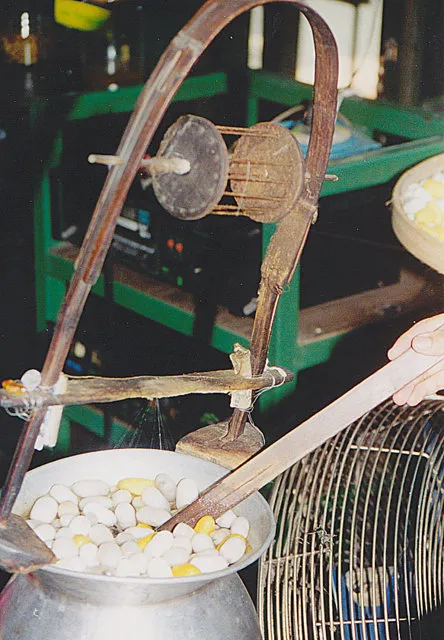
Most conversations about luxury silk focus on thread count, momme weight, or the particular luster of a well-thrown yarn. Fewer conversations acknowledge what underpins all of it: the silkworm. Bombyx mori, the domesticated silk moth whose larvae spin the cocoons from which virtually all commercial silk is derived, does not operate on a designer's production schedule. It operates on nature's. And nature, as any farmer will attest, has its own priorities.
For US designers and discerning buyers accustomed to treating fabric sourcing as a purely commercial transaction, understanding the biological and seasonal rhythms that govern silk production opens a new dimension of strategy. Price fluctuations that seem arbitrary become predictable. Shortages that appear sudden reveal themselves as foreseeable. And the timing of purchasing decisions, once intuitive, becomes deliberate.
The Silkworm's Year: Two Harvests and Their Implications
In the primary silk-producing regions of China, India, and Central Asia, the silkworm's annual cycle typically yields two distinct harvests: a spring crop and an autumn crop. China, which accounts for roughly 70 to 80 percent of global raw silk production, sees its spring harvest—known as the spring cocoon crop—as the more highly prized of the two.
The spring harvest, occurring between April and June in China's Yangtze River Delta and Pearl River Delta regions, benefits from cooler temperatures, slower larval development, and the resulting production of longer, finer, more lustrous filaments. Silk reeled from spring cocoons commands a premium on international markets, and the fabrics woven from this raw material—particularly the finest charmeuses, satins, and habotai silks—reflect that quality differential in both hand and drape.
The autumn harvest, running roughly from August through October, yields a larger volume of cocoons, but the filaments are generally shorter and less uniform. This does not make autumn-crop silk inferior in all applications—spun silk yarns, for instance, work well with shorter fiber lengths—but for weavers and fabric houses producing the highest-grade luxury textiles, the spring crop is the preferred raw material.
India's silk calendar differs somewhat by region. Karnataka, which produces the majority of India's mulberry silk, operates on a cycle influenced by the monsoon season, with production peaks in the spring and again in the late autumn. Tussar silk, derived from wild silkworms in Jharkhand and Odisha, follows a still-different seasonal pattern tied to the availability of host trees rather than cultivated mulberry leaves.
How Cocoon Yields Translate to Market Pricing
The connection between cocoon yields and fabric pricing is not immediate—raw silk passes through several stages of processing (reeling, throwing, dyeing, weaving) before it reaches a fabric merchant—but the chain of causation is direct and consequential.
A poor spring harvest in China's Jiangsu province, whether caused by late frosts, disease among silkworm populations, or disruptions to mulberry cultivation, will tighten the supply of premium raw silk available to mills in the summer months. By autumn, the downstream effect begins to appear in the pricing of finished luxury silk fabrics. By the following spring, US buyers may find that the charmeuse they sourced at a certain price the prior year has increased by ten or fifteen percent—not because of currency fluctuations or labor costs, but because the worms had a difficult season.
Conversely, an exceptional harvest year—characterized by favorable temperatures, abundant mulberry leaf supply, and healthy silkworm populations—can create a brief window of relative abundance in the premium silk market. Fabric prices soften marginally, and buyers who recognize the signal and act accordingly can secure exceptional materials at favorable terms.
The Climate Variable: An Increasingly Unpredictable Factor
Climate variability has introduced a new layer of uncertainty into what was once a relatively predictable agricultural cycle. Silkworms are exquisitely sensitive to temperature: optimal rearing occurs between 77 and 86 degrees Fahrenheit, and even modest deviations can reduce cocoon quality or increase silkworm mortality. As weather patterns in East Asia and South Asia have grown less stable, the reliability of harvest forecasts has diminished.
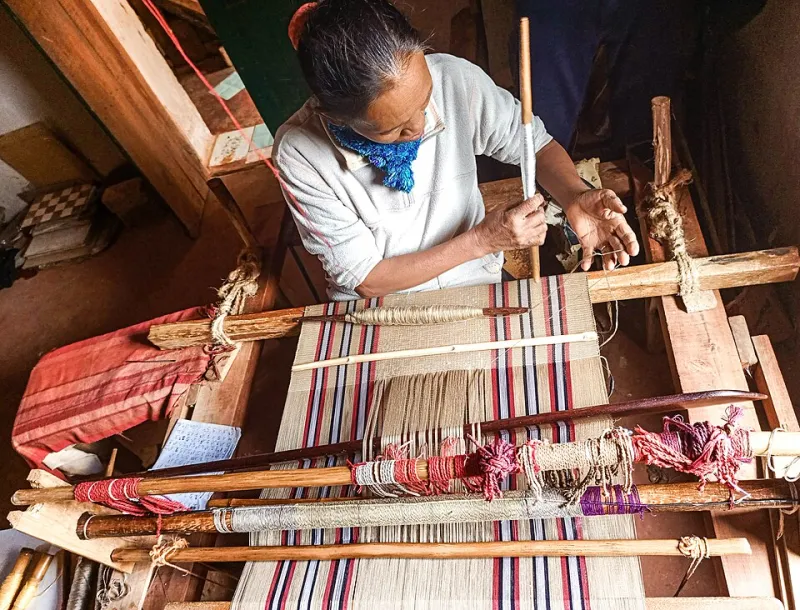
For US buyers, this underscores the importance of maintaining relationships with suppliers who are close enough to the production chain to provide early intelligence on harvest conditions. A fabric house with direct connections to reeling mills in Suzhou or weaving cooperatives in Varanasi will have visibility into supply conditions weeks or months before that information is reflected in market pricing.
Reading the Calendar: When to Buy, When to Wait
Armed with an understanding of the silk production cycle, a strategic buyer can begin to construct a purchasing calendar that aligns with market conditions rather than working against them.
Late summer through early autumn—roughly July through September—is generally the period when spring-crop silk has been processed and woven into finished fabric, and when the market begins to absorb the new supply. This window often represents favorable conditions for buyers seeking high-grade luxury silk, as inventory levels are healthy and competition for the best materials has not yet peaked.
The period leading into the major fashion buying seasons—roughly January through March—tends to see heightened demand from designers preparing spring and summer collections. Prices firm, and the finest fabrics are often committed to established clients before casual inquiries arrive. Buyers who wait until this window to source premium silk frequently find themselves competing for a diminished selection at elevated prices.
The practical implication is straightforward: designers who source premium silk six to nine months in advance of their production needs are not merely being organized. They are participating in the market at a moment of relative advantage.
Building a Sourcing Strategy Around Seasonal Intelligence
For the US designer or retailer who is serious about luxury silk, integrating harvest cycle awareness into sourcing practice is a meaningful differentiator. It requires building relationships with suppliers who communicate transparently about production conditions, maintaining sufficient financial flexibility to act opportunistically when favorable conditions arise, and cultivating the patience to resist reactive purchasing during periods of artificial scarcity.
Silk, at its finest, is the product of an extraordinary convergence of biology, climate, craft, and commerce. Understanding the calendar that governs its creation does not diminish the magic of the material. It deepens it—and it ensures that the designers who work with it do so with every possible advantage.