Prove It's Real: Seven At-Home Checks Before You Commit to Silk
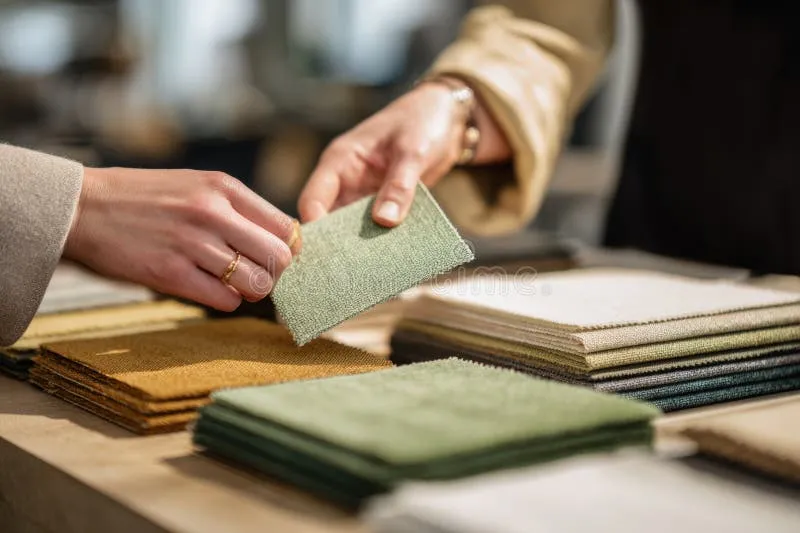
Photo: hands testing silk fabric close-up burn test swatch table, via thumbs.dreamstime.com
Online fabric shopping has a fundamental problem: you cannot touch what you are buying. That gap has been filled by an industry of imitations — polyesters engineered to mimic silk's sheen and drape, marketed under names like "silk-touch" and "satin silk" that suggest far more than they state. For designers vetting a new supplier and consumers protecting a significant purchase, a handful of simple at-home checks can separate genuine mulberry silk from a convincing counterfeit. None requires a laboratory. Most require less than a minute.
1. The Burn Test (Use a Snippet, Not Your Order)
Cut a small swatch or pull a few threads from an inconspicuous edge and burn them over a sink. Real silk smells like burning hair or feathers — it is a protein fiber, chemically akin to keratin — and it burns slowly, self-extinguishing, leaving a brittle black ash that crushes to powder between the fingers. Polyester melts rather than burns: it shrinks into a hard plastic bead, smells of chemical acridity, and may produce black smoke. This is the single most definitive home test. Keep a known silk swatch on hand as a control.
2. The Warmth Test
Silk is an exceptional thermal regulator. Press the fabric flat against your cheek or the inside of your wrist for a few seconds. Genuine silk warms to your skin almost immediately and feels comfortably warm rather than clammy. Synthetics tend to stay cool and slightly slick, resisting the transfer of heat. It is a subtle test, but one your hand learns quickly — which is why experienced buyers rely on it first.
3. The Sheen Check: Shine Versus Glare
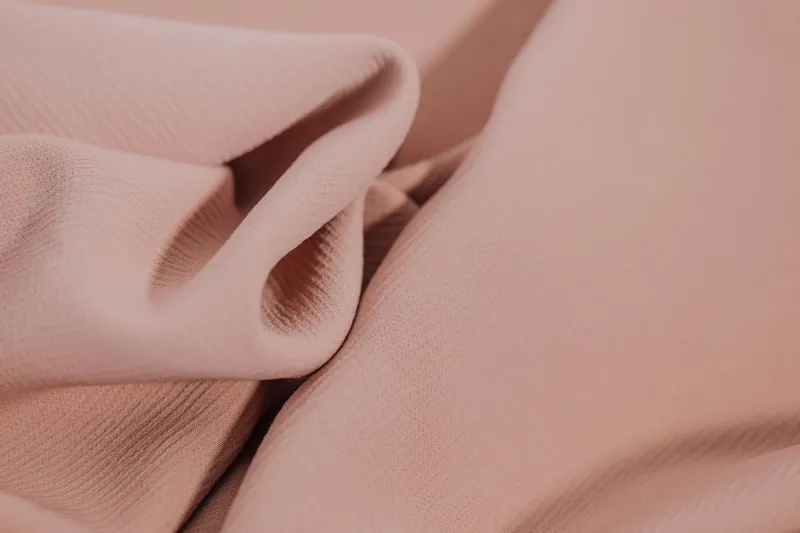
Hold the fabric under a light source and tilt it slowly. Silk produces a luster — a soft, luminous glow that shifts across the weave as the angle changes. Polyester satin produces a glare: a flat, uniform, almost metallic gleam that looks the same from every angle. Photographs exaggerate the difference; in person it is unmistakable once seen. This is the test that most reliably separates the two at a glance.
4. The Weave Inspection
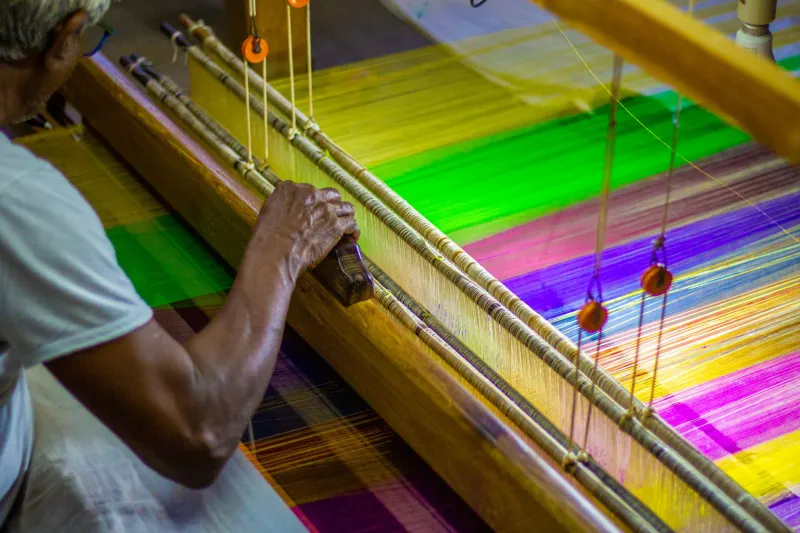
Bring the fabric close to your eye, ideally with daylight behind it. Silk, woven from natural filaments, shows minor irregularities: slight variations in thread thickness, tiny slubs, a hand-woven character that machine-spun polyester cannot replicate. A perfectly uniform surface with identical threads in every direction is a strong signal of synthetic production. Note that high-quality silk is still finely woven — you are looking for organic variation, not flaws.
5. The Ring Test
A classic, and it works. Pull a corner of lightweight silk fabric through a wedding band or similar ring. Genuine silk, with its fine filaments and natural elasticity, glides through smoothly. Polyester, stiffer and more static-prone, tends to bunch, catch, and resist. The test is best suited to lightweight weaves like habotai and charmeuse; heavier silks such as duchess satin will not cooperate regardless of authenticity.
6. The Smell Test (Before Burning)
Even without flame, silk carries a faint, natural scent — sometimes described as a subtle fibrous or organic odor. Synthetics often carry a chemical or plastic smell, particularly when freshly unwrapped from packaging. Rub the fabric briskly between your hands to warm it, then smell. It is not conclusive on its own, but in combination with the other checks it adds signal.
7. The Price-Sanity Check
Finally, do the arithmetic. Genuine mulberry silk requires years of sericulture, careful reeling, and skilled weaving; it cannot be produced at fast-fashion prices. If a listing offers 22-momme charmeuse at a fraction of the prevailing market rate, the discount is the answer, not the deal. Compare prices across several reputable suppliers to establish a realistic range for the weight and weave you need, then treat dramatic outliers with suspicion.
Building Confidence, One Check at a Time
No single test is infallible, which is why seasoned buyers layer them: the hand-feel first, the sheen check second, the burn test on a sacrificial thread before committing to yardage. For designers, these checks are also due diligence — a supplier who welcomes scrutiny is a supplier worth keeping. For consumers, they are the difference between an heirloom and a disappointment. Silk has been counterfeited for as long as it has been coveted; a minute of verification protects a purchase meant to last decades.