Dress the Rooms: Five Places at Home Where Silk Outperforms Anything in Your Wardrobe
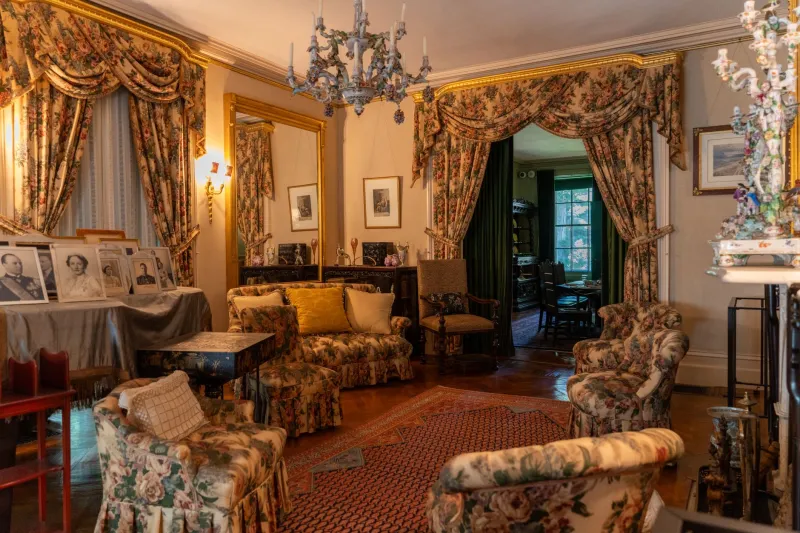
Ask most Americans where silk belongs and they will point at a closet. Ask an interior designer and you will get a very different answer. Within the design trade, silk has always been a material of rooms as much as garments — and for the homeowner with an eye for fine fabric, it may be the most underutilized luxury in the house.
What follows are five applications where silk earns its place, often for less than the cost of a single designer handbag.
1. Drapery That Manages Light Like No Other Fabric
No textile manipulates daylight quite like silk. Its tight weave and natural luster diffuse harsh sun into a soft, warm glow while its density provides genuine privacy and, in heavier weights, meaningful insulation at the window.
The practical consideration is sun exposure. Direct, sustained ultraviolet light degrades silk fibers over years, so the standard guidance is to line silk drapery with a protective backing — a modest addition that can extend the life of the panels by a decade or more. Dupioni and raw silk are the favored weaves for windows; both hold a crisp fold and bring a subtle texture that flat cotton cannot match.
2. Wallpaper Panels and Silk on the Walls
Wallcovering is where silk makes its most dramatic entrance. Silk wallpaper panels — long a fixture of Manhattan pied-à-terres and Palm Beach living rooms — are increasingly available to a broader market, and their effect is transformative. The fiber's natural sheen shifts with the light throughout the day, giving walls a depth that paint cannot simulate.
Panel application, rather than full-room coverage, keeps budgets rational: a single accent wall behind a bed or sideboard delivers the visual impact at a fraction of whole-room cost.
3. Upholstery With a Spine
Silk upholstery carries a reputation for fragility that heavier weaves do not deserve. Slubbed silks and silk blends rated for residential use hold up remarkably well on pieces that receive moderate traffic — an occasional chair, a headboard, the seat of a dressing stool. The rule of thumb from upholsterers: reserve pure silk for pieces that are sat in, not lived on, and consider silk-linen or silk-wool blends for anything adjacent to a television remote or a toddler.
4. Bedding for the Discerning Sleeper
Silk bedding is the most personal entry on this list and arguably the most rewarding. Mulberry silk pillowcases and duvet covers are gentle on hair and skin, thermoregulating across seasons, and — at a 22-momme standard — durable enough for nightly use. The investment case is straightforward: a quality silk pillowcase costs a fraction of a silk blouse and logs more hours of use per year than nearly any garment you own.
5. Framed Textile Art: The Smallest Buy, the Biggest Statement
For those hesitant to commit silk to a sofa or a window, framed textile art offers the gentlest introduction. A yard of exceptional hand-woven silk — vintage obi fabric, a length of hand-loomed dupioni, a fragment of embroidery — mounted behind glass becomes a piece of art with genuine material presence.
The cost calculus is where this option shines. A single yard of remarkable silk frequently costs less than a mass-produced print of comparable size, and it carries the added virtue of being one of a kind.
A Note on Care and Proportion
Two principles govern all five applications. First, keep silk out of prolonged direct sun wherever possible — drapery linings, UV-filtering window film, and thoughtful placement do most of the protective work. Second, buy less and buy better: a single panel of extraordinary silk, well placed, outperforms a room full of ordinary fabric. It is the same discernment that guides a serious wardrobe, applied to the rooms where you actually spend your hours.