The New Luxury Advisor: How Fabric Consultants Are Transforming the Way Affluent Americans Invest in Silk
For decades, the language of personal advisory services has belonged to wine, fine art, and real estate. A collector of Burgundy retains a sommelier. A patron of contemporary painting works with a gallerist-turned-advisor. A Manhattan penthouse buyer rarely navigates the market without a specialist whispering in their ear. Now, that same model — intimate, knowledge-driven, deeply personalized — has arrived in the world of luxury textiles.
Across the United States, a growing cohort of high-net-worth consumers and independent fashion designers are engaging fabric consultants: specialists whose sole purpose is to help clients navigate the layered, often opaque world of premium silk sourcing, selection, and long-term curation. The phenomenon is nascent, but its momentum is unmistakable.
Why Silk, and Why Now
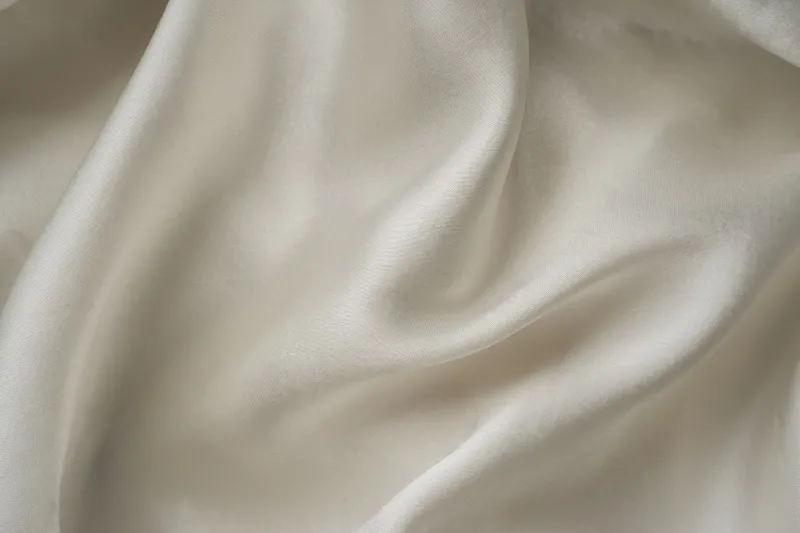
The timing is not accidental. As luxury consumers have grown more sophisticated — and more skeptical of marketing language — the demand for genuine expertise has intensified. Thread counts have been exposed as imprecise metrics. Country-of-origin labels tell only part of the story. The difference between a 16-momme charmeuse and a 22-momme equivalent may be invisible to the untrained eye yet transformative in terms of drape, durability, and perceived value.
In this environment of complexity, the fabric consultant fills a vacuum that neither a traditional retailer nor an online marketplace can adequately address. These advisors bring a fluency in sericulture, weave construction, and regional production traditions that transforms what might otherwise be an overwhelming purchase into a considered, confident investment.
The parallel to wine advising is instructive but imperfect. A sommelier translates vintage, terroir, and producer reputation into a recommendation calibrated to a client's palate and occasion. A fabric consultant performs a structurally similar service — translating momme weight, yarn twist, and finishing technique into a recommendation calibrated to a client's creative vision, body type, and intended use. Both roles require years of sensory training that cannot be replicated by a search engine.
What These Consultants Actually Do
The scope of a fabric consultant's engagement varies considerably, but several core functions appear consistently across the emerging profession.
Sourcing and vetting. At the foundational level, consultants maintain relationships with mills, importers, and specialty retailers — relationships built over years and grounded in firsthand knowledge of production quality. When a client needs a specific weight of silk habotai for a resort collection, or a double-faced silk satin for a bespoke evening gown, the consultant's network becomes the client's advantage.
Education and calibration. Many clients arrive with strong aesthetic instincts but limited technical vocabulary. A skilled consultant bridges that gap, teaching clients to assess hand-feel, evaluate luster under different lighting conditions, and understand how a fabric will behave after repeated wear and careful laundering. This educational component transforms a transactional relationship into an ongoing advisory one.
Collection curation. For high-net-worth consumers building personal wardrobes of bespoke silk garments, consultants often serve a curatorial function — ensuring that acquisitions cohere as a collection rather than accumulating as a series of disconnected impulse purchases. This long-view perspective mirrors the work of an art advisor assembling a collection with intention and internal logic.
Market intelligence. Silk pricing is sensitive to agricultural cycles, geopolitical shifts in major producing regions, and fluctuating demand from global fashion houses. Consultants who track these variables can advise clients on optimal purchasing windows — a service with meaningful financial implications for designers operating at volume.
The Qualifications Behind the Title
Unlike wine sommeliers, who can pursue recognized certifications through bodies such as the Court of Master Sommeliers, fabric consultants currently operate without a formal credentialing infrastructure in the United States. This absence of standardization is both a challenge and an opportunity.
The most credible practitioners typically hold a combination of formal training — degrees or certificates in textile science, fashion design, or materials engineering — and substantial hands-on experience working with mills, ateliers, or high-end retailers. Some have spent years in production roles at luxury houses; others have built their expertise through decades of independent sourcing. What distinguishes the genuinely qualified from the merely enthusiastic is an ability to speak with precision about fiber properties, weave architecture, and finishing chemistry, not simply to describe how a fabric looks or feels in impressionistic terms.
For clients evaluating potential consultants, a few questions cut through the ambiguity quickly: Can the consultant explain the difference between thrown and spun silk yarns? Can they describe how a Jacquard loom creates pattern without the use of applied dye? Can they identify a fabric's momme weight by hand within a reasonable margin of accuracy? Competence in these areas signals genuine expertise.
What This Means for Independent Designers
For independent designers operating in the American market, the rise of fabric consulting presents a dual opportunity that deserves careful consideration.
First, the model itself is accessible. A designer with deep silk expertise — one who has invested years in understanding the material at a technical and sensory level — is already positioned to offer consultative services to clients, whether those clients are retail consumers commissioning bespoke pieces or smaller brands seeking sourcing guidance. Formalizing that expertise as an advisory offering, rather than simply a byproduct of the design process, can open meaningful revenue streams and elevate professional positioning.
Second, the expectations this trend sets for the broader market are instructive. High-net-worth consumers who have worked with fabric consultants arrive at every subsequent retail interaction with heightened expectations. They ask better questions. They notice details that less informed buyers overlook. Designers who can meet that elevated standard of engagement — who can speak fluently about why they chose a particular silk, what its provenance is, and how it will perform over time — will find themselves differentiated in ways that price alone cannot achieve.
Building a Reputation as a Trusted Silk Authority
The path to positioning oneself as a fabric authority in one's own market begins with deliberate investment in knowledge. Visiting mills when possible, maintaining direct relationships with reputable suppliers, and staying current with developments in sericulture and textile science are foundational practices. So is cultivating the ability to communicate that knowledge accessibly — to translate technical precision into language that resonates with clients who care deeply about quality but may not yet have the vocabulary to articulate why.
Documentation matters as well. Designers who write about their material choices — through newsletters, editorial contributions, or client-facing educational content — build a body of evidence that establishes credibility over time. In a market increasingly attentive to provenance and intentionality, the designer who can explain the story behind their silk is not simply selling fabric. They are offering the kind of informed, curated experience that defines luxury in its most meaningful sense.
The fabric consultant is, at its core, a response to a market that has grown too complex for instinct alone to navigate reliably. For those willing to develop and share genuine expertise, that complexity is not an obstacle. It is an invitation.