Fewer Pieces, Greater Purpose: How Luxury Designers Are Building Silk-Centered Wardrobes That Last
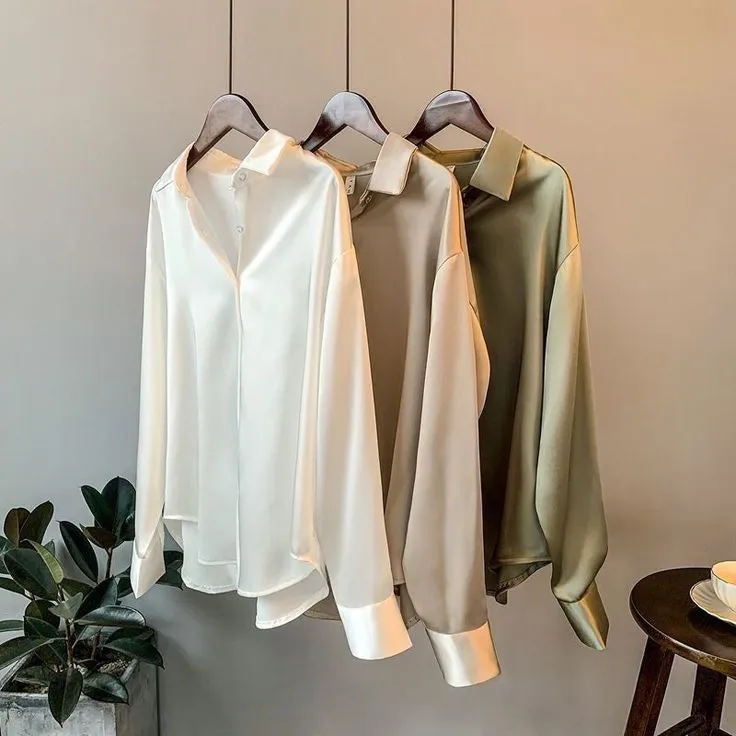
Photo: luxury silk blouses capsule wardrobe flat lay editorial fashion, via i.pinimg.com
There is a quiet revolution unfolding in the closets of America's most thoughtful dressers. It does not announce itself with runway fanfare or social media campaigns. It announces itself in the understated drape of a well-cut charmeuse blouse worn for the fourth season in a row — and looking better for it.
Independent designers, wardrobe consultants, and style-conscious consumers across the country are systematically dismantling the fast-fashion logic that dominated the past two decades. In its place, they are constructing something more deliberate: a silk-centered capsule wardrobe built on investment pieces that reward patience, care, and a deeper understanding of fabric quality.
The Economic Argument Nobody Wants to Admit
The initial sticker shock of premium silk is real. A yard of 19-momme silk crepe de chine from a reputable supplier will cost considerably more than a bolt of polyester satin from a discount textile house. On a per-yard basis, the comparison feels uncomfortable. Across a lifetime of use, it becomes almost embarrassing in the other direction.
Designers who have made this shift often describe the same revelation: they spent more money buying cheaper fabric repeatedly than they ever would have spent buying quality once. Brooklyn-based independent designer Maya Chen, who works primarily with luxury separates, put it plainly during a recent conversation: "I used to replace my personal wardrobe basics every eighteen months. Now I'm wearing pieces I made four years ago and they're structurally and aesthetically perfect. The math isn't complicated."
This is not merely anecdotal. Silk's natural protein fiber structure gives it a tensile strength that synthetic alternatives cannot replicate at comparable weights. A properly maintained silk garment does not pill, does not develop the micro-tears that make polyester look tired, and does not lose its luster with repeated gentle laundering. The longevity premium is built into the fiber itself.
What "Core Silk Staples" Actually Means
The capsule wardrobe concept is not new, but its application to luxury textiles requires a more specific vocabulary. Not all silk serves the same purpose, and the designers leading this movement are deliberate about which weights and weaves earn a permanent place in the rotation.
For daytime professional wear, many designers anchor their wardrobes around 16- to 19-momme silk CDC (crepe de chine). The weight provides enough structure to hold a clean line through a full workday without the heaviness that makes layering impractical. A well-cut CDC blouse in ivory or navy becomes, in the words of Los Angeles-based designer Rafael Moreno, "the piece that makes every other piece in the closet perform better."
For eveningwear and fluid separates, 12- to 16-momme charmeuse offers the liquid drape that no synthetic can authentically approximate. The way charmeuse catches and releases light as the wearer moves is a function of the silk fiber's triangular cross-section — a structural property that polyester mimics visually but never replicates kinetically.
Tailored outerwear and structured pieces tend to favor heavier silk twills and dupioni, which provide the body and surface interest of fine woven fabric without sacrificing the temperature-regulating properties that make silk genuinely functional across American seasons.
The Environmental Case Is Harder to Argue Against
The fast fashion industry's environmental toll is well-documented at this point, and the designers building silk-centered wardrobes are acutely aware of where they are positioned within that larger conversation. Silk is a natural protein fiber that biodegrades. It is produced through a process — sericulture — that, when practiced responsibly, requires no petroleum inputs and generates no microplastic pollution.
The comparison to polyester and nylon is not subtle. Synthetic textiles shed microplastics with every wash cycle, a fact that has drawn increasing attention from environmental researchers and policy advocates. A silk blouse washed in cool water with a gentle detergent releases none of these particles. It returns, eventually, to the earth without leaving a chemical legacy.
This does not mean silk production is without environmental considerations — water use, land management for mulberry cultivation, and energy inputs in processing all merit scrutiny. But the trajectory of a quality silk garment — worn hundreds of times, then decomposing naturally — is categorically different from a fast-fashion polyester piece worn a dozen times before ending its life in a landfill where it will persist for centuries.
How Working Designers Source for Personal Collections
The sourcing strategies that designers apply to client work translate directly, and often more selectively, to their personal wardrobes. The approach tends to be opportunistic and relationship-driven rather than trend-responsive.
Many independent designers maintain standing relationships with premium silk suppliers who alert them to exceptional inventory — deadstock from luxury mills, end-of-run quantities in unusual colorways, or seasonal arrivals in weights that are difficult to source consistently. These relationships allow designers to acquire fabric when quality and price align favorably, rather than when a trend demands it.
The result is a personal wardrobe built on genuine textile knowledge rather than marketing. When a designer selects a silk for their own use, they are drawing on direct experience with how that specific weight and weave performs over time — how it responds to body heat, how it recovers from travel, how it ages through repeated wear and careful maintenance.
This expertise gap is one reason the silk capsule movement has taken root most deeply among people who work with fabric professionally. They have seen, with their own hands, what quality means at the fiber level. They are not persuaded by marketing language that conflates shimmer with substance.
Building the Collection Deliberately
For consumers who are not professional designers, the entry point to silk-centered dressing is simpler than it might appear. The principle is sequential rather than wholesale: replace one fast-fashion basic with one quality silk equivalent, wear it consistently, observe the difference in longevity and daily satisfaction, and proceed from there.
The categories that reward this substitution most immediately tend to be those where the body interacts most directly with the fabric — blouses, camisoles, lightweight trousers, and sleep and loungewear. These are the pieces worn closest to the skin, where silk's natural temperature regulation and hypoallergenic properties are most perceptible.
From that foundation, the collection grows organically, guided by actual use rather than theoretical completeness. A capsule wardrobe built this way — piece by piece, over seasons, through genuine experience with quality silk — does not look like a curated editorial spread. It looks like a closet that actually works.
That, ultimately, is the revolution these designers are describing. Not an aesthetic movement. Not a marketing category. A fundamental reconsideration of what clothing is for, and what it deserves to be made of.