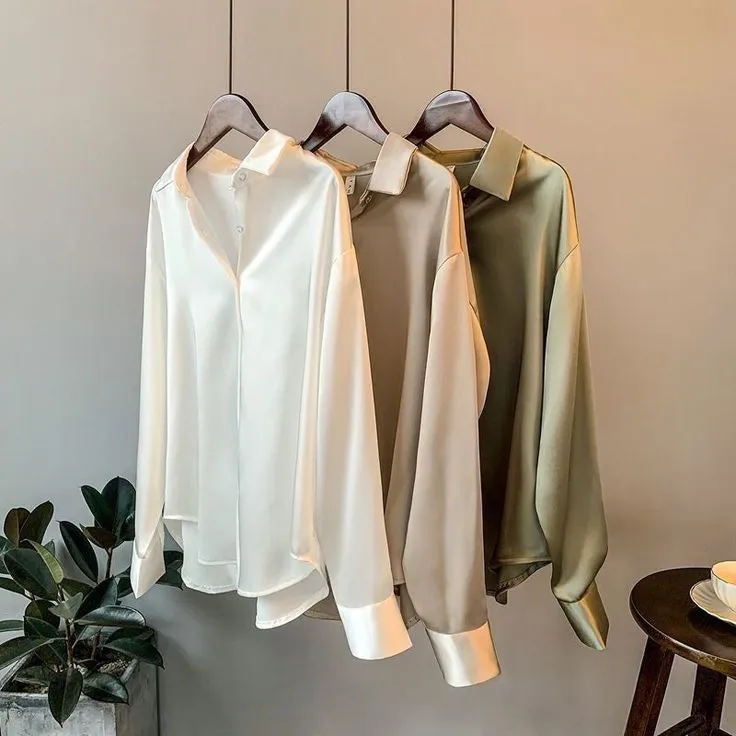
When Silk Meets Scale: How Mass Production Quietly Destroys What Makes Luxury Fabric Extraordinary
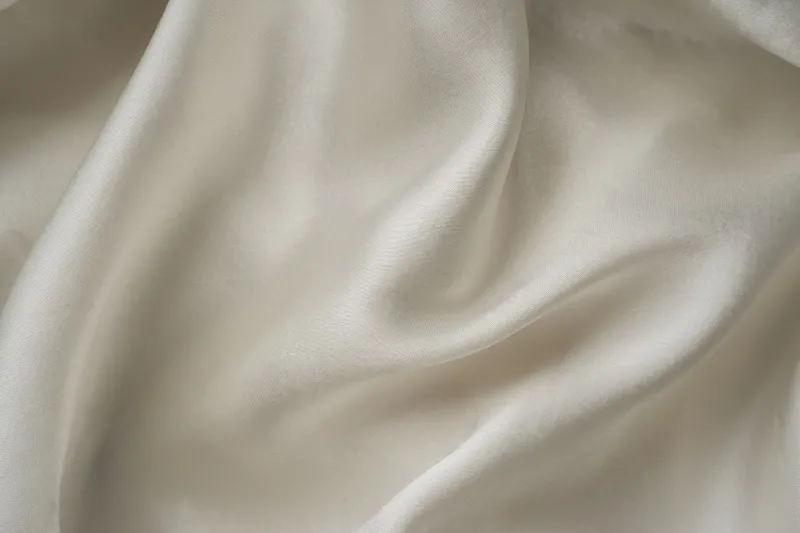
There is a particular cruelty in watching a magnificent fabric reduced to something ordinary. Not through obvious negligence, but through the slow accumulation of small compromises — a faster dye bath here, a shortened finishing process there — each decision seemingly reasonable in isolation, yet collectively devastating to the final product. This is the central tension facing any designer who sources premium silk and then navigates the realities of commercial manufacturing.
Luxury silk is not simply an expensive material. It is a living record of agricultural precision, artisanal processing, and centuries of refined technique. When that material enters a production environment optimized for volume rather than quality, the degradation is rarely dramatic. It is quiet, incremental, and — for designers who lack the vocabulary to identify it — almost invisible until a client holds the finished garment and feels that something is subtly wrong.
The Anatomy of a Compromised Collection
Consider a common scenario that plays out with troubling regularity in American fashion: an independent designer sources a genuinely exceptional charmeuse — perhaps a 19-momme silk with a luminous, weighted drape that photographs beautifully and moves with the body in precisely the right way. The sample garments are extraordinary. The pre-orders arrive. And then the production run begins.
The manufacturer, working to price targets that were always slightly too aggressive, makes the first substitution: a comparable charmeuse, they assure the designer, from a different supplier. The momme weight is listed identically on the spec sheet. What the spec sheet does not capture is the difference in filament quality, the variation in degumming technique, or the fact that the replacement fabric was finished on equipment calibrated for synthetic blends. The resulting garment is not obviously inferior. But it does not move the same way. It does not catch light with the same depth. And over time — after washing, after wearing — the difference becomes unmistakable.
This is not hypothetical. It is the documented experience of numerous emerging American designers who entered manufacturing partnerships without adequate fabric verification protocols.
Why Silk Is Uniquely Vulnerable to Industrial Processing
Unlike cotton or wool, silk's performance characteristics are extraordinarily sensitive to the conditions of its processing. The sericin protein that naturally coats silk filaments, the degumming process that removes it, the tension applied during weaving, the temperature of dye baths, the mechanical action of finishing equipment — each variable has a measurable effect on the fabric's hand, luster, and longevity.
Mass-market production environments are engineered to minimize variability and maximize throughput. These are legitimate industrial virtues. But they are fundamentally at odds with the conditions that allow premium silk to express its full character. High-volume dye operations run hotter and faster than artisanal processes, which can strip silk of its natural sheen and compromise tensile strength. Mechanical finishing — calendering, for instance — can produce a superficially attractive surface while flattening the dimensional quality that gives fine silk its depth.
The result is a fabric that passes visual inspection and meets basic specification requirements but has been quietly diminished in every qualitative dimension that justified its price point.
The Sourcing-Production Disconnect
One of the most persistent structural problems in American fashion is the separation between sourcing decisions and production oversight. A designer may spend considerable time and resources identifying and securing an exceptional silk — building relationships with importers, verifying provenance, requesting lab certifications — only to hand that fabric over to a cut-and-sew operation with no mechanism for ensuring that the material integrity is preserved through every subsequent step.
Manufacturing partners are not adversaries. Most are competent professionals working within real constraints. But their incentive structures do not naturally align with the preservation of fabric character. Unless a designer establishes explicit, enforceable standards — and maintains active oversight throughout production — the path of least resistance will consistently favor efficiency over quality.
This is why the most successful independent designers treat their fabric specifications as living documents rather than static purchase orders. They define not only the material itself but the acceptable handling parameters: maximum dye bath temperatures, approved finishing processes, storage conditions, and inspection criteria at each production stage.
Building a Framework for Fabric Integrity
Protecting premium silk through a commercial production cycle requires a systematic approach that begins long before the first yard is cut.
Establish material standards in writing. Before engaging any manufacturing partner, document your fabric specifications in precise, measurable terms. Momme weight, weave structure, fiber content verification method, and finishing requirements should all be explicit. Vague language — "comparable quality" or "equivalent fabric" — creates the opening through which substitutions enter.
Require pre-production samples from actual production materials. Not from your approved sample yardage, but from the specific lot of fabric that will be used in the production run. Dye lot variations, finishing inconsistencies, and material substitutions almost always surface at this stage if you are looking for them.
Understand your manufacturer's equipment. A facility optimized for denim or performance fabrics may not have the equipment — or the institutional knowledge — to handle fine silk appropriately. Ask specific questions about finishing equipment, dye processes, and the experience of their technical staff with luxury wovens.
Build inspection points into the contract. Not simply a final inspection, but defined checkpoints throughout production. Fabric inspection upon receipt. In-process checks during cutting and sewing. Pre-shipment review of finished garments. Each checkpoint is an opportunity to identify and correct problems before they become irreversible.
Maintain direct relationships with your fabric suppliers. When your manufacturing partner knows that your fabric source is traceable and that you have an ongoing relationship with that supplier, material substitution becomes both more difficult and less tempting.
The Brand Cost of Compromised Silk
Designers sometimes calculate the risk of production shortcuts in purely financial terms — a potential return, a dissatisfied wholesale account, a run of garments that must be discounted. These are real costs. But the less quantifiable damage is often more significant.
A luxury brand's authority rests on the consistency of its material standards. Clients who invest in a designer's work are not simply purchasing a garment; they are purchasing confidence in a set of values. When silk that was sourced with care and intention arrives as something diminished, the breach of trust extends beyond the individual piece. It erodes the credibility that independent designers spend years — and considerable resources — building.
The designers who navigate this challenge most successfully are those who treat fabric integrity as a non-negotiable brand value rather than a variable cost. They build production partnerships with manufacturers who understand and respect that position. They accept that certain price points cannot accommodate certain quality standards, and they make their business decisions accordingly.
Premium silk is not forgiving of the environments that do not deserve it. That is not a weakness. It is, in fact, the quality that makes it worth protecting.