The Evening Hour Returns: Silk Reclaims American Formalwear
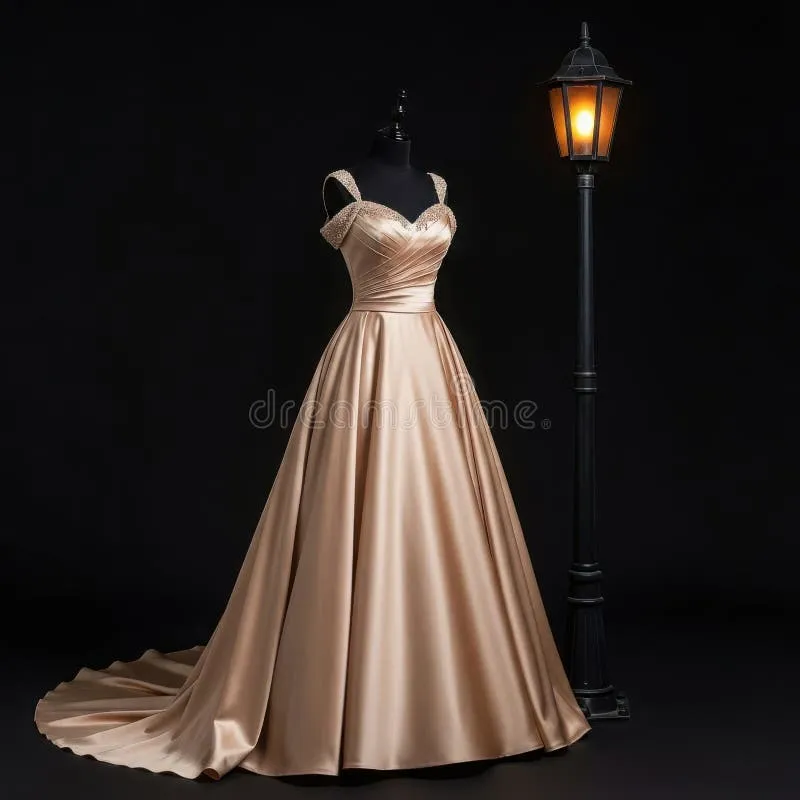
Photo: elegant silk evening gown charmeuse satin on mannequin dim lighting, via thumbs.dreamstime.com
For much of the past decade, American formalwear drifted toward the synthetic: stretch crepes and shimmering polyesters that photographed well under flash and asked nothing of the wearer. That era is ending. Across the country — on red carpets, at gallery openings in New York, at the resurgent calendar of society weddings from Napa to Newport — silk has returned to the evening hour, and it has returned with intent.
Why Now: The Occasion Comes Back
The post-pandemic years suspended much of American celebratory life, and with it, the wardrobe that accompanied it. As weddings, galas, and formal dinners returned in force, so did an appetite for garments that felt genuinely ceremonial. A polyester gown can imitate the look of luxury; it cannot imitate the experience. Silk moves with the body, takes light in a way no synthetic can fully counterfeit, and carries a weight and temperature that the wearer registers immediately.
There is also a generational current at work. Younger American designers, many trained in small studios rather than large houses, have embraced silk not as nostalgia but as a performance material — a natural fiber with remarkable strength, breathability, and dye depth. Their clients, in turn, increasingly ask what a garment is made of before asking what it looks like.
The Three Fabrics Leading the Revival
Charmeuse remains the workhorse of evening silk. Its satin face and matte back produce the liquid drape that defines bias-cut gowns and fluid slip silhouettes. At 16 to 22 momme, it is substantial enough to hold a column shape while still moving like water. Designers showing in New York and Los Angeles have leaned into full-length charmeuse in deep, saturated colors — oxblood, forest, midnight — where the fabric's luster does the decorative work that embellishment once did.
Duchess satin is the counterweight: heavy, structured, and sculptural. Traditionally the fabric of bridal couture and opera coats, it has been reinterpreted by emerging American ateliers for architectural gowns, dramatic sleeves, and separates that hold their line under ballroom light. Its stiffness is not a limitation but a vocabulary — it allows a designer to build volume without internal scaffolding.
Silk organza supplies the atmosphere. Sheer, crisp, and surprisingly strong, it is appearing as overlay layers, veiling, and voluminous sleeves that catch light without adding visual weight. In bridal especially, organza has displaced tulle for designers who want transparency with body and a natural fiber story to tell.
Choosing the Right Weight for the Statement Piece
For readers commissioning or constructing an occasion garment, weight is the first decision and the most consequential one.
- For fluid gowns and draped silhouettes: choose charmeuse in the 16–22 momme range. Below 16, the fabric can cling and reveal; above 25, it loses the liquid movement that makes charmeuse singular.
- For structured gowns, corsetry, and bridal foundations: duchess satin, typically 25 momme and heavier, provides the body to hold shape through a long evening.
- For overlays, sleeves, and veiling: silk organza at 3.5 to 5 momme delivers sheerness with resilience. It also presses beautifully, holding crisp pleats and folds.
- For hybrid pieces: many designers layer organza over charmeuse, gaining the depth of the underlayer and the halo of the top one.
Always order swatches and view them under both daylight and warm artificial light — eveningwear lives under the latter, and silk's luster shifts noticeably between the two.
A Fabric With a Memory
Part of silk's renewed appeal is its permanence. A well-made silk gown is not a season's purchase; it is an heirloom in waiting, a garment that can be re-tailored, re-worn, and eventually handed down. As American formal life resumes its full calendar, the fabric of the evening is once again the one that has always attended it — woven, dyed, and finished by hand, and built to outlast the occasion that first called for it.