The Living Cellar: A Collector's Guide to Aging and Storing Luxury Silk Textiles
There is a particular kind of knowledge that separates a true collector from a casual enthusiast: the understanding that acquisition is only the beginning. The second discipline — preservation — is where the investment either compounds or quietly deteriorates. Among luxury textiles, silk demands this second discipline more acutely than almost any other material. Its protein-based fiber structure, extraordinary luster, and sensitivity to environmental variables make it simultaneously the most rewarding and the most unforgiving fabric to steward over time.
The analogy to fine wine is not merely poetic. A serious collector of Napa Valley Cabernet does not simply purchase bottles and leave them on a kitchen shelf. They manage temperature, humidity, light exposure, and vibration with careful precision, understanding that the cellar environment is as important as the vintage itself. Luxury silk asks for precisely the same level of deliberate care — and rewards it with decades of maintained beauty and, in the case of rare or artisan-produced textiles, appreciating cultural and monetary value.
Understanding Silk as a Living Fiber
Silk is, at its core, a protein. Produced by the Bombyx mori silkworm as a continuous filament of fibroin and sericin, it shares more biological kinship with human hair than it does with cotton or linen. This origin matters enormously for storage, because protein fibers respond to environmental stressors in ways that synthetic fabrics and plant-based textiles simply do not.
Exposure to ultraviolet light causes the amino acid chains within silk fibroin to break down — a process called photodegradation — which manifests first as a subtle shift in luster and eventually as brittleness and fiber loss. Excess moisture encourages the growth of mold and mildew, both of which digest silk's protein structure from within. Conversely, environments that are too dry cause the fiber to desiccate, becoming fragile and prone to splitting along weave lines. Heat accelerates all of these processes simultaneously.
The collector who understands silk's biological nature approaches storage not as a passive act of placing fabric in a drawer, but as an active management of a living material.
The Four Environmental Variables That Define a Proper Silk Cellar
Temperature is the most straightforward variable to control and among the most consequential. The ideal storage temperature for luxury silk textiles falls between 60°F and 70°F. Basements in American homes, particularly in temperate climates, can approximate this range naturally, though supplemental climate control is advisable for serious collections. Avoid attics and upper-floor storage rooms, which are subject to extreme seasonal fluctuation — the enemy of long-term textile integrity.
Relative humidity should be maintained between 45% and 55%. This range keeps silk fibers adequately hydrated without creating the moisture levels that invite biological degradation. A calibrated digital hygrometer, available for modest cost, is an indispensable tool for any collector who takes this investment seriously. In regions with pronounced seasonal humidity swings — the Gulf Coast, the Pacific Northwest, the upper Midwest — a dehumidifier or humidifier may be necessary to maintain the target range year-round.
Light exposure must be treated as a zero-tolerance issue. Even ambient indoor light, over extended periods, causes measurable damage to silk dyes and fiber structure. Storage should occur in complete darkness. Archival boxes constructed from acid-free board are the standard choice among museum textile curators, and for good reason: they block light entirely while also buffering against minor humidity fluctuations. For displayed pieces, UV-filtering glass and deliberate rotation schedules — limiting any single piece's exposure to light — are the accepted professional practice.
Air quality and pollutants represent a subtler but genuine concern. Airborne acids, including those generated by off-gassing from certain wood products, cardboard, and synthetic materials, can cause silk to yellow and weaken over time. This is why archival-grade, acid-free storage materials are not optional for a serious collection. Cedar, though prized as a moth deterrent in folk tradition, is actually inappropriate for direct contact with fine silk, as its oils can stain delicate fibers. Opt instead for lavender sachets or cedar in a form that does not touch the fabric directly.
Folding, Rolling, and the Question of Physical Stress
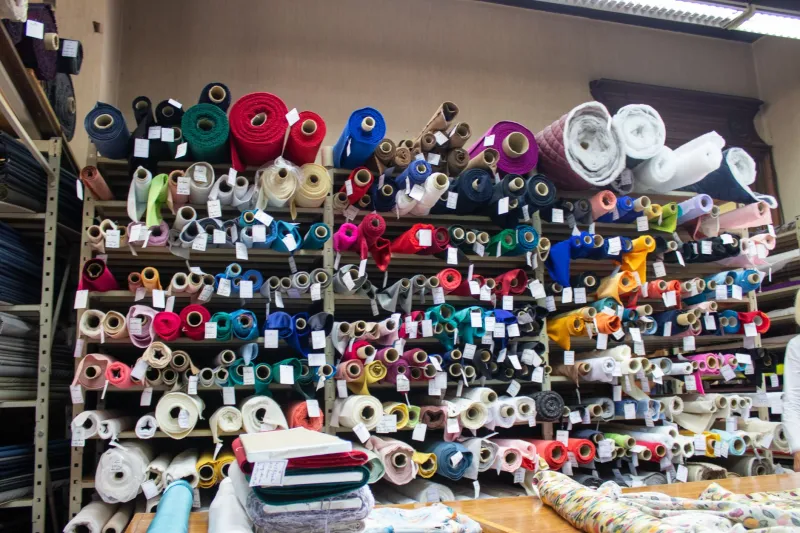
The physical manner in which silk is stored creates its own set of long-term consequences. Fabric held in a sharp fold for extended periods develops permanent crease lines that, over time, become weakened stress points. Museum textile departments have long favored rolling over folding for this reason: a bolt of silk wound around an acid-free tube with a layer of acid-free tissue between each revolution distributes stress evenly and eliminates the crease problem entirely.
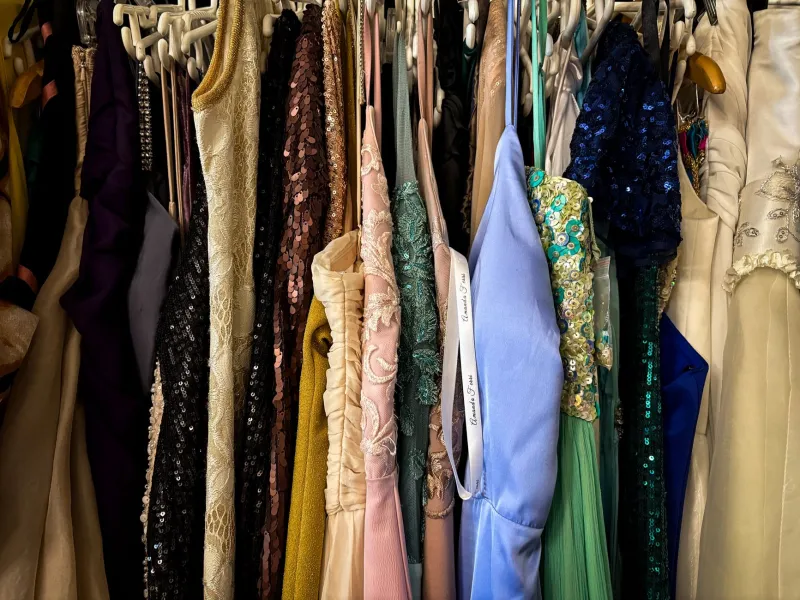
For collectors storing finished garments or cut yardage that cannot be easily rolled, refolding every three to six months is strongly advised. This simple practice redistributes stress points and prevents the fiber damage that accumulates along static fold lines. Interleave each fold with a sheet of acid-free tissue to further cushion and separate layers.
Avoid compression at all costs. Heavy objects placed atop stored silk, or textiles packed too tightly in drawers or boxes, flatten the natural texture of woven silk and can permanently alter the hand of the fabric — that ineffable quality of how a textile feels and moves, which is, for many collectors and designers, the very thing they are preserving.
Pest Management: The Overlooked Threat
Silk's protein composition makes it nutritionally attractive to certain insects, most notably clothes moths (Tineola bisselliella) and carpet beetles. In American homes, these pests are not hypothetical concerns — they are common and capable of causing irreversible damage to an unprotected collection.
A layered approach is most effective. Regular inspection of stored textiles — quarterly at minimum — allows for early detection. Clean silk before storage, as perspiration and organic residue attract pests to otherwise untouched fabric. Sealed archival boxes provide a physical barrier that is the single most reliable preventive measure. For additional deterrence, cedar and lavender, used correctly, can discourage infestation without risking the fabric itself.
For collections of significant value, a consultation with a textile conservator is a worthwhile investment. Several institutions, including the Textile Museum in Washington, D.C., and the Metropolitan Museum of Art's conservation department, publish accessible guidance on best practices, and independent conservators who specialize in historic textiles can assess and advise on specific collections.
When Storage Becomes Stewardship
The collector who creates a proper environment for luxury silk is engaged in something that transcends personal ownership. Rare silk textiles — hand-woven Jacquards, antique brocades, artisan-produced charmeuse from heritage mills — represent accumulated human knowledge: the understanding of sericulture, of loom mechanics, of dye chemistry, of design tradition. When these fabrics are preserved with rigor, that knowledge is held intact for future designers, scholars, and inheritors.
This is the deeper argument for treating silk storage as a serious discipline. The immediate benefit is practical: a properly stored textile retains its commercial and aesthetic value. The longer benefit is cultural. Each bolt of exceptional silk that survives another generation is a physical record of craft at its highest expression — a primary document that no photograph or archive can fully replace.
The cellar analogy, in the end, holds in both directions. A great wine, properly stored, becomes more complex, more interesting, more itself. The finest silk textiles, held in the right conditions, do not simply endure. They wait, with extraordinary patience, to be discovered again.