Color That Keeps Its Counsel: A Buyer’s Guide to Silk Dye Performance
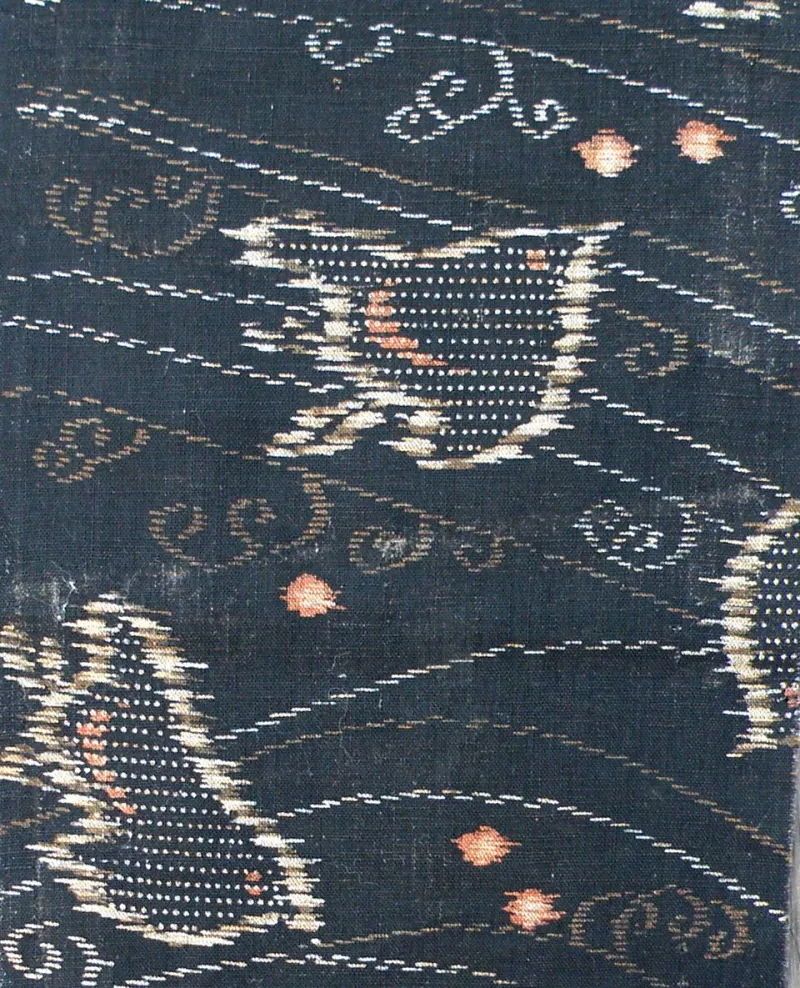
Photo: Chris Hazzard, CC BY-SA 3.0, via Wikimedia Commons
A silk garment is often chosen for its color before its hand or construction. The sheen, the depth, the way a saturated dye catches light—these are the qualities that make silk feel alive. They are also the qualities most vulnerable to time. Dyed silk does not usually announce its decline. It whispers. A navy turns slightly dusty. A red develops pale edges at the collar. A black crocks onto a white lining. A pale pink yellows along a fold. By the time the change is obvious, the piece may be difficult to rescue.
The good news is that color performance is not mysterious. It is the product of dye chemistry, fiber preparation, finishing, and care. Buyers who understand those variables can choose more wisely and store more intelligently. They can also ask better questions at the point of sale, when the answers still matter.
Why Dyed Silk Ages Unevenly
Silk is a protein fiber with a complex surface. It takes dye readily, but it does not take it uniformly unless the mill controls the process carefully. Variations in yarn twist, degumming, and weaving can cause dye to strike differently across a single length of cloth. A fabric that looks even under showroom lighting may reveal subtle streaks in daylight or after cleaning.
The dye class matters as much as the application. Different dyes offer different balances of lightfastness, washfastness, and resistance to crocking. A mill may choose a dye that produces a brilliant shade but fades in sunlight, or a dye that holds color well but feels harsher. The choice is a trade-off, and the buyer rarely sees it stated on the label.
Three Failure Modes: Light, Rub, and Chemistry
Light exposure. Ultraviolet radiation breaks down dye molecules over time. The effect is cumulative and often uneven. A garment stored on a hanger near a window may fade along one shoulder while the other remains true. A scarf worn outdoors will fade differently from one kept in a drawer. Dark saturated colors often show light damage as a dulling or bronzing effect rather than a simple loss of depth.
Crocking. This is the transfer of dye through rubbing. It is common in deeply dyed silks, especially blacks, navies, and reds, and it can stain lighter fabrics, leather, and skin. Crocking is not the same as bleeding in water, though the two can be related. A silk that crocks may look perfect on the bolt and still leave marks on a white shirt after an evening of wear.
Chemistry. Perspiration, deodorant, perfume, and cleaning agents can all affect dye. Silk is sensitive to alkaline substances, and perspiration can degrade both the fiber and the color over time. Improper cleaning can shift a shade, cause water marks, or set a stain. Even storage materials matter. Acid-free tissue and a stable environment are not affectations; they are part of the color’s long-term care.
Colorways That Ask More of the Buyer
Deep saturated shades—black, navy, burgundy, forest green, and vivid red—are often the most vulnerable to crocking and light damage. They may also show abrasion as a lighter patch at high-friction points such as cuffs, collars, and seat seams. Bright fashion shades can fade dramatically in sunlight. Pale pastels can yellow with age or oxidation, particularly if stored in contact with acidic paper or wood.
Prints and jacquards add another layer of risk. If the dyes in different colored areas have different fastness, the pattern can change unevenly. A printed silk scarf may lose one color while the others remain stable. A jacquard may show fading only in the ground or only in the motif. Buyers should inspect patterned silks under daylight and ask whether the mill has tested the individual colors, not just the overall fabric.
Questions to Ask at Purchase
Ask the seller whether the fabric has been tested for lightfastness and crocking. Ask for the dye class if it is known, and ask whether the color is expected to shift with cleaning. Ask whether the silk has been washed or pre-shrunk, since water exposure can affect both fit and color. Ask for a care recommendation in writing. A reputable mill or maker should be able to provide this without defensiveness.
For high-value pieces, ask for a small swatch that can be tested. Expose it to daylight for a few weeks, rub it against white cloth, and clean it according to the recommended method. This is not a perfect simulation, but it is more informative than a showroom light. Designers should also test seam allowances and press cloths, since heat and friction can reveal color movement that the flat fabric does not show.
Care, Storage, and the Long View
Store silk away from direct sunlight and fluorescent light. Use acid-free tissue in folds to prevent sharp creases, and avoid hanging heavy silks for long periods. Keep the storage area dry and stable; extremes of humidity can encourage both fading and fiber damage. Clean perspiration and spills promptly, but do not rub. Seek a cleaner who understands silk and will test for colorfastness before treating the whole piece.
Wear matters too. A deeply dyed silk blouse worn against bare skin will age differently from one worn over a camisole. A scarf used as a head covering will fade differently from one worn at the neck. Rotating pieces, avoiding prolonged sun exposure, and storing them properly will do more for color than any single treatment.
Buying for Graceful Aging
No dyed silk is immortal. The goal is not to prevent all change but to choose pieces whose change will be graceful. A well-dyed silk may soften in tone without becoming patchy. A stable black may retain its depth for years. A carefully finished print may keep its pattern legible even as the ground shifts. Those qualities are worth asking about, and worth paying for.
Color is part of a silk’s value, but it is also part of its contract with time. Buyers who treat colorfastness as a technical question rather than an afterthought will make better choices. They will also be less likely to discover, after a season or two, that the color they loved was never designed to keep its counsel.